Buy wassergaertner.eu ?
We are moving the project
wassergaertner.eu .
Are you interested in purchasing the domain
wassergaertner.eu ?
domain@kv-gmbh.de · 0541-91531010
Buy wassergaertner.eu ?
Which lemma can I use to prove the pumping lemma?
To prove the pumping lemma for regular languages, you can use the lemma itself. The pumping lemma states that for any regular language L, there exists a constant p (the pumping length) such that any string s in L with length at least p can be divided into three parts, s = xyz, satisfying certain conditions. By using the pumping lemma, you can show that for any regular language, there exists a pumping length p such that any string in the language can be pumped to generate an infinite number of strings also in the language. **
How to apply the Pumping Lemma?
To apply the Pumping Lemma, you first assume that a language L is regular. Then, you choose a suitable string w from L that satisfies the conditions of the Pumping Lemma. Next, you decompose w into three parts, u, v, and x, such that w = uvx and |v| > 0 and |uv| ≤ p, where p is the pumping length given by the Pumping Lemma. Finally, you show that for any i ≥ 0, the string uv^ix is not in L, thus leading to a contradiction and proving that L is not regular. **


Similar search terms for Lemma
Top-Angebote
Products related to Lemma:
-
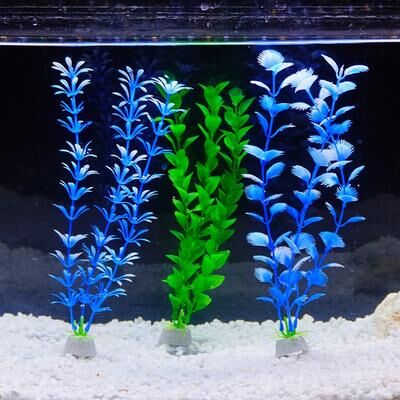
Multisell Products Hub Artificial Aquatic Plants, Green Grass For Aquarium Landscaping Decor 3pcs 25cmTransform Your Aquarium with Artificial Aquatic Plants Bring life to your fish tank with 3 pcs Artificial Plastic Green Grass Aquatic Plants. Crafted from durable, highquality plastic, these plants offer a realistic look while maintaining...34,97 $*Shipping: 0,00 $Secure redirect to the provider
-
Inspired Finds Mini LED Water Fogger Mist Maker With Pumpkin Light For Halloween Fountains Ponds & Party Decorations Mini LED Water Fogger Mist Maker With Pumpkin Light For Halloween Fountains Ponds & Party DecorationsCreate an enchanting atmosphere with our LED water fogger, designed to produce a cool, mysterious mist for seasonal displays and decorative water features. Using ultrasonic mist maker technology, this compact device transforms water into a fine fog...34,99 $*Shipping: 0,00 $Secure redirect to the provider
-
Inspire Select Glow Silicone Aquarium Plants Fluorescent Aquatic Grass & Coral Decor For Fish Tank Landscaping green Water GrassTurn your aquarium into a glowing underwater paradise that instantly grabs attention and makes your fish tank feel alive. These fluorescent aquarium plants are designed to add vibrant color, depth, and natural beautywithout the upkeep of real...53,99 $*Shipping: 0,00 $Secure redirect to the provider
-
SAFAVIEH Lemma Window Polyester Home Accent, Modern Sofa or Bed Accent"Lemma Window Home Accent: sheer polyester fabric and grommet top header The Lemma Window Home Accent is a modern home accent. This polyester home accent measures 51"" W x 84"" L. Available in 2 colorways: Grey and Lavander."20,05 $*Shipping: 0,00 $Secure redirect to the provider


-
How do you apply the Pumping Lemma?
The Pumping Lemma is applied to prove that a language is not regular. To apply the Pumping Lemma, you assume that the language in question is regular and then choose a suitable string from the language. Next, you decompose the string into three parts as per the conditions of the Pumping Lemma. By selecting a specific pumping length, you show that no matter how the string is pumped, it will eventually generate a string that is not in the language, thus contradicting the assumption that the language is regular. **
-
What do you do during a student internship in landscaping and gardening (gardening and landscaping/gardening)?
During a student internship in landscaping and gardening, you would typically assist with various tasks such as planting, weeding, watering, and pruning plants. You may also help with landscape design, installation of hardscape features, and maintenance of outdoor spaces. Additionally, you may have the opportunity to learn about soil preparation, pest control, and proper use of gardening tools and equipment. Overall, the internship provides hands-on experience in all aspects of landscaping and gardening, allowing you to gain valuable skills and knowledge in the field. **
-
What is the question about the Pumping Lemma?
The question about the Pumping Lemma typically asks students to use the lemma to prove that a given language is not regular. Students are usually asked to choose a specific string from the language, decompose it into three parts as per the lemma's requirements, and then show that no matter how the string is pumped, it will not remain in the language. This demonstrates that the language does not satisfy the conditions of the Pumping Lemma and therefore cannot be regular. **
-
What is the Pumping Lemma for regular languages?
The Pumping Lemma for regular languages is a fundamental result in theoretical computer science that provides a necessary condition for a language to be regular. It states that for any regular language L, there exists a constant p (the pumping length) such that any string s in L of length at least p can be split into three substrings, s = xyz, satisfying three conditions: 1) |xy| ≤ p, 2) |y| > 0, and 3) for all i ≥ 0, the string xy^iz is also in L. This lemma is often used to prove that certain languages are not regular by showing that they do not satisfy the conditions of the Pumping Lemma. **

Why can't it be pumped with the pumping lemma?
The pumping lemma is a tool used to prove that a language is not regular. If a language cannot be pumped with the pumping lemma, it means that the language does not satisfy the conditions required for it to be regular. This could be due to the language having a non-regular structure or containing patterns that cannot be captured by a finite automaton. In other words, the language may have properties that cannot be replicated by the finite memory of a regular language. **
What does the Pumping Lemma state for regular languages?
The Pumping Lemma for regular languages states that for any regular language L, there exists a pumping length p such that any string s in L with length at least p can be divided into three parts, u, v, and w, such that s = uvw, satisfying three conditions: 1) |uv| ≤ p, 2) |v| > 0, and 3) for all i ≥ 0, the string uv^iw is also in L. This lemma is used to prove that certain languages are not regular by showing that they do not satisfy the conditions of the Pumping Lemma. **
Top-Angebote
Products related to Lemma:
-
SAFAVIEH Lemma Window Polyester Home Accent, Modern Sofa or Bed Accent"Lemma Window Home Accent: sheer polyester fabric and grommet top header The Lemma Window Home Accent is a modern home accent. This polyester home accent measures 51"" W x 84"" L. Available in 2 colorways: Grey and Lavander."22,04 $*Shipping: 0,00 $Secure redirect to the provider
-
Multisell Products Hub Artificial Aquatic Plants, Green Grass For Aquarium Landscaping Decor 3pcs 25cmTransform Your Aquarium with Artificial Aquatic Plants Bring life to your fish tank with 3 pcs Artificial Plastic Green Grass Aquatic Plants. Crafted from durable, highquality plastic, these plants offer a realistic look while maintaining...34,97 $*Shipping: 0,00 $Secure redirect to the provider
-
Inspired Finds Mini LED Water Fogger Mist Maker With Pumpkin Light For Halloween Fountains Ponds & Party Decorations Mini LED Water Fogger Mist Maker With Pumpkin Light For Halloween Fountains Ponds & Party DecorationsCreate an enchanting atmosphere with our LED water fogger, designed to produce a cool, mysterious mist for seasonal displays and decorative water features. Using ultrasonic mist maker technology, this compact device transforms water into a fine fog...34,99 $*Shipping: 0,00 $Secure redirect to the provider
-
Which lemma can I use to prove the pumping lemma?
To prove the pumping lemma for regular languages, you can use the lemma itself. The pumping lemma states that for any regular language L, there exists a constant p (the pumping length) such that any string s in L with length at least p can be divided into three parts, s = xyz, satisfying certain conditions. By using the pumping lemma, you can show that for any regular language, there exists a pumping length p such that any string in the language can be pumped to generate an infinite number of strings also in the language. **
-
How to apply the Pumping Lemma?
To apply the Pumping Lemma, you first assume that a language L is regular. Then, you choose a suitable string w from L that satisfies the conditions of the Pumping Lemma. Next, you decompose w into three parts, u, v, and x, such that w = uvx and |v| > 0 and |uv| ≤ p, where p is the pumping length given by the Pumping Lemma. Finally, you show that for any i ≥ 0, the string uv^ix is not in L, thus leading to a contradiction and proving that L is not regular. **
-
How do you apply the Pumping Lemma?
The Pumping Lemma is applied to prove that a language is not regular. To apply the Pumping Lemma, you assume that the language in question is regular and then choose a suitable string from the language. Next, you decompose the string into three parts as per the conditions of the Pumping Lemma. By selecting a specific pumping length, you show that no matter how the string is pumped, it will eventually generate a string that is not in the language, thus contradicting the assumption that the language is regular. **
-
What do you do during a student internship in landscaping and gardening (gardening and landscaping/gardening)?
During a student internship in landscaping and gardening, you would typically assist with various tasks such as planting, weeding, watering, and pruning plants. You may also help with landscape design, installation of hardscape features, and maintenance of outdoor spaces. Additionally, you may have the opportunity to learn about soil preparation, pest control, and proper use of gardening tools and equipment. Overall, the internship provides hands-on experience in all aspects of landscaping and gardening, allowing you to gain valuable skills and knowledge in the field. **
Similar search terms for Lemma
-
Inspire Select Glow Silicone Aquarium Plants Fluorescent Aquatic Grass & Coral Decor For Fish Tank Landscaping green Water GrassTurn your aquarium into a glowing underwater paradise that instantly grabs attention and makes your fish tank feel alive. These fluorescent aquarium plants are designed to add vibrant color, depth, and natural beautywithout the upkeep of real...53,99 $*Shipping: 0,00 $Secure redirect to the provider
-
SAFAVIEH Lemma Window Polyester Home Accent, Modern Sofa or Bed Accent"Lemma Window Home Accent: sheer polyester fabric and grommet top header The Lemma Window Home Accent is a modern home accent. This polyester home accent measures 51"" W x 84"" L. Available in 2 colorways: Grey and Lavander."20,05 $*Shipping: 0,00 $Secure redirect to the provider
-
SAFAVIEH Lemma Window Polyester Home Accent, Modern Sofa or Bed Accent"Lemma Window Home Accent: sheer polyester fabric and grommet top header The Lemma Window Home Accent is a modern home accent. This polyester home accent measures 51"" W x 84"" L. Available in 2 colorways: Grey and Lavander."21,68 $*Shipping: 0,00 $Secure redirect to the provider
-
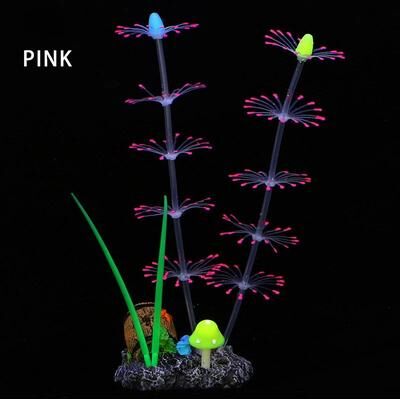
Inspire Select Glow Silicone Aquarium Plants Fluorescent Aquatic Grass & Coral Decor For Fish Tank Landscaping pink Water GrassTurn your aquarium into a glowing underwater paradise that instantly grabs attention and makes your fish tank feel alive. These fluorescent aquarium plants are designed to add vibrant color, depth, and natural beautywithout the upkeep of real...50,96 $*Shipping: 0,00 $Secure redirect to the provider
-
What is the question about the Pumping Lemma?
The question about the Pumping Lemma typically asks students to use the lemma to prove that a given language is not regular. Students are usually asked to choose a specific string from the language, decompose it into three parts as per the lemma's requirements, and then show that no matter how the string is pumped, it will not remain in the language. This demonstrates that the language does not satisfy the conditions of the Pumping Lemma and therefore cannot be regular. **
-
What is the Pumping Lemma for regular languages?
The Pumping Lemma for regular languages is a fundamental result in theoretical computer science that provides a necessary condition for a language to be regular. It states that for any regular language L, there exists a constant p (the pumping length) such that any string s in L of length at least p can be split into three substrings, s = xyz, satisfying three conditions: 1) |xy| ≤ p, 2) |y| > 0, and 3) for all i ≥ 0, the string xy^iz is also in L. This lemma is often used to prove that certain languages are not regular by showing that they do not satisfy the conditions of the Pumping Lemma. **
-
Why can't it be pumped with the pumping lemma?
The pumping lemma is a tool used to prove that a language is not regular. If a language cannot be pumped with the pumping lemma, it means that the language does not satisfy the conditions required for it to be regular. This could be due to the language having a non-regular structure or containing patterns that cannot be captured by a finite automaton. In other words, the language may have properties that cannot be replicated by the finite memory of a regular language. **
-
What does the Pumping Lemma state for regular languages?
The Pumping Lemma for regular languages states that for any regular language L, there exists a pumping length p such that any string s in L with length at least p can be divided into three parts, u, v, and w, such that s = uvw, satisfying three conditions: 1) |uv| ≤ p, 2) |v| > 0, and 3) for all i ≥ 0, the string uv^iw is also in L. This lemma is used to prove that certain languages are not regular by showing that they do not satisfy the conditions of the Pumping Lemma. **
* All prices are inclusive of VAT and, if applicable, plus shipping costs. The offer information is based on the details provided by the respective shop and is updated through automated processes. Real-time updates do not occur, so deviations can occur in individual cases. ** Note: Parts of this content were created by AI.